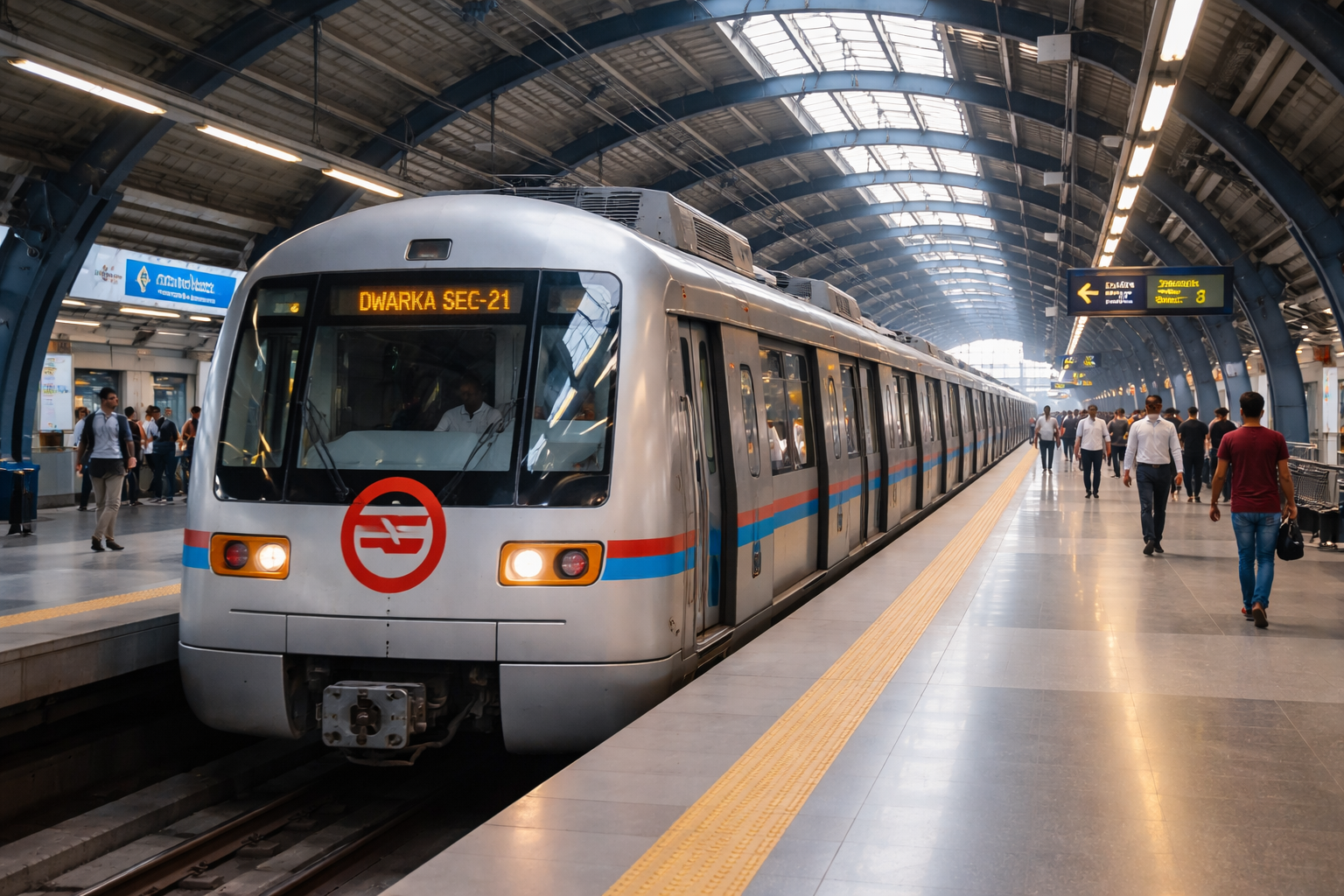
In a city that never stops, the Delhi Metro is the steady heartbeat. Since the first whistle blew on the Red Line in 2002, the Delhi Metro Rail Corporation (DMRC) has transformed from a single 8km stretch into a world-class network spanning nearly 400 km.
Whether you are a daily commuter dodging the infamous Delhi traffic or a tourist exploring the historic Red Fort, the metro is your most reliable companion. This guide dives into everything you need to know about the network in 2026—from Phase 4 updates to hidden travel hacks.
1. Navigating the Web: Understanding the Metro Lines
The Delhi Metro is famous for its color-coded simplicity. As of 2026, the network is a vibrant rainbow of efficiency:
| Line Color | Route Highlights | Best For… |
| Yellow Line | Samaypur Badli to Millennium City Centre | Business hubs (Gurgaon) and Old Delhi charms. |
| Blue Line | Dwarka Sec 21 to Noida/Vaishali | Connecting West Delhi to the corporate offices of Noida. |
| Violet Line | Kashmere Gate to Raja Nahar Singh | Heritage walks (Lajpat Nagar, Lotus Temple, Heritage Line). |
| Pink Line | Majlis Park to Shiv Vihar | The “Ring Road” of the metro, connecting all major lines. |
| Magenta Line | Janakpuri West to Botanical Garden | Fast-track to the Domestic Airport (Terminal 1). |
| Airport Express (Orange) | New Delhi to Yashobhoomi Dwarka Sec 25 | High-speed luxury to IGI Airport (Terminal 3). |
2. The Future is Here: Phase 4 & The Golden Line
The year 2026 marks a massive milestone for Delhi’s infrastructure. The Phase 4 expansion is partially operational, introducing the highly anticipated Golden Line (formerly known as the Silver Line).
- Triple Interchange Hubs: Stations like Aerocity and Central Secretariat are evolving into triple interchange hubs, allowing seamless switching between three different lines.
- Driverless Technology: Building on the success of the Magenta and Pink lines, Phase 4 corridors now feature fully automated, Unmanned Train Operations (UTO), increasing frequency and safety.
- Last-Mile Connectivity: New routes are reaching deep into residential pockets like Tughlakabad and Maujpur, reducing the reliance on e-rickshaws and autos.
3. A “Green” Revolution
The Delhi Metro isn’t just about moving people; it’s about saving the planet. In 2026, the DMRC has solidified its status as a global leader in sustainability:
- Solar Powered: Over 50% of the Metro’s power requirement is met through solar energy.
- CarbonLite Travel: Have you noticed your QR ticket lately? It now shows the exact amount of $CO_2$ you saved by choosing the metro over a car. On average, you save about 32.38 grams of $CO_2$ per kilometer.
- Zero Waste: The metro effectively harnesses energy from city landfills and practices 100% rainwater harvesting at most stations.
4. Pro-Tips for Every Commuter
To master the Delhi Metro, you need more than just a map. You need strategy:
- Avoid the Peak: Morning rush (9:00 AM – 11:00 AM) and evening rush (6:00 PM – 8:00 PM) are legendary. If you can, travel mid-day for a guaranteed seat.
- The First Coach Rule: The first coach in the direction of travel is always reserved for women. It’s usually less crowded and has dedicated security.
- Go Digital: Skip the token queues. Use the DMRC Momentum 2.0 app to buy QR tickets or top up your Smart Card instantly.
- Tourist Cards: Visiting for a weekend? Get the Unlimited Tourist Card for ₹200 (1 day) or ₹500 (3 days) for endless rides across the city.
5. Fascinating Facts You Didn’t Know
- Deepest Point: The Hauz Khas interchange station sits at a depth of 29 meters—equivalent to a 10-story building underground.
- Ridership Records: On peak days (like Raksha Bandhan), the metro has been known to carry over 8 million passengers in a single day!
- The Metro Museum: Located at Patel Chowk, this is South Asia’s first metro museum and a must-visit for history buffs.
More Than Just a Train
The Delhi Metro has done what few thought possible: it made Delhi’s vast, chaotic landscape feel like a small, connected neighbourhood. As Phase 4 continues to roll out, the “Lifeline of Delhi” is only getting stronger, smarter, and greener.